
Tibetan medicine understands pulse diseases from the perspectives of the functions of the white and black veins, the imbalance of the three causes, and the circulation of qi and blood. This article introduces its traditional theory, classification, and governance approach; The related concepts do not fully correspond to the classification of modern medicine's nerves, blood vessels, and diseases.

The physiological function of the pulse
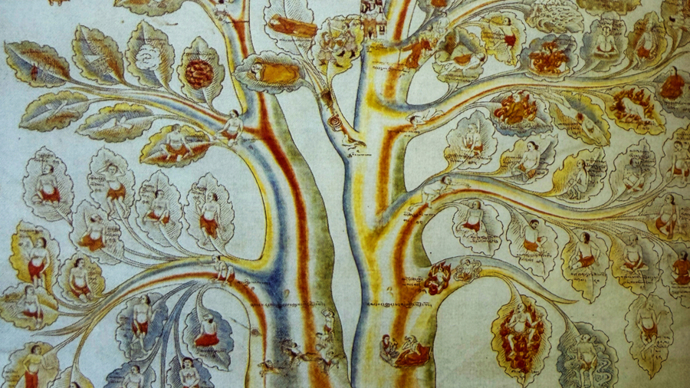
According to Tibetan medicine theory, meridians are the core vascular system in the human body that runs qi and blood, connects organs and limbs, and can be divided into two categories: white veins and black veins. The original text cites the Four Medical Classics, linking the black veins with blood vessels and the white veins with nerves; White veins are responsible for sensation, movement, and information transmission. The two major pulse systems work together to complete functions such as qi and blood circulation, visceral communication, limb regulation, and sensory transmission. This is a summary of traditional theory and should not be directly regarded as a definition of modern anatomy.
Among them, the white veins are connected to the internal organs, and the external network includes the muscles, tendons, and joints of the limbs. Under the synergistic effect of sustaining vitality and promoting circulation, they dominate the sensory perception, limb movement, and conduction functions of the five senses. According to traditional theory, the five sources of the White Vessel are mainly water and air, which are the circulation pathways of dragon (qi) and also the trajectories of pathological bacon and dragon (qi) that are prone to invasion.
The original text explains the white blood vessels through the brain, spinal cord, and systemic branches, and summarizes their connections with the phrase 'the brain is the sea of white blood vessels'. After white vein damage, symptoms such as sensory, conduction, and motor dysfunction can be seen.
The black veins are considered as a piping system for blood circulation, and their scope is explained in the original text using the heart, arteries, veins, and capillaries. According to Tibetan medicine theory, black veins tend to be hot, with fire and wind being the main five sources; Under the propulsion of the Universal Dragon, the heart transports blood and nutrients throughout the body, completing the circulation of qi and blood and nourishing the organs and limbs.
What is pulse disease
Tibetan medicine refers to various diseases caused by the imbalance of the white and black veins due to internal and external factors (dragon, red, and bacon), poor circulation of qi and blood, damage to the veins, and abnormal function, collectively known as pulse diseases. Pulse diseases can be divided into white pulse disease, black pulse disease, and black and white pulse combined disease. The pathogenesis is complex, the course of the disease can be long, and it may be accompanied by sensory, motor, or blood function damage.
The original text compares stroke, hypertension, arteriosclerosis, cerebral ischemia, trigeminal neuralgia, peripheral neuropathy, cervical spondylosis, and lumbar disc herniation. These modern diseases each have diagnostic criteria and cannot be diagnosed or treated solely based on the classification of pulse diseases.
White vein disease
White vein disease refers to lesions caused by damage and dysfunction of the white veins and collaterals. Traditional descriptions often involve abnormalities in perception, conduction, and motor function. The original text lists external injuries such as broken veins caused by sharp tools, stone sticks, long-term pressure on the body, exposure to rain and moisture, wind and cold invasion, severe labor damage to veins, and white vein breakage.
According to Tibetan medicine theory, it is also possible for diseases such as plague, poison, and heat to invade the meridians, causing qi and blood to beat and block the white veins, or for the meridians to be blocked by blood stasis and abnormal circulation, resulting in impaired perception and conduction functions throughout the body, ultimately leading to white vein dysfunction.
Common manifestations include crooked mouth and eyes, unclear speech, dizziness and headache, memory loss, insomnia, numbness, swelling and pain in hands and feet, muscle atrophy and spasms, limb stiffness, claudication, hemiplegia, urinary and fecal incontinence, and radiating pain in limbs. In the original text, it was associated with stroke, trigeminal neuralgia, diabetes peripheral neuropathy, neuritis, lumbar disc herniation and cervical spondylosis of nerve root type, not to mean that the above diseases were equivalent to white pulse disease.
The traditional treatment approach is based on the principles of opening the orifices and promoting blood circulation, drying up yellow water, and unblocking qi and blood. 'Kaiqiao' here refers to the opening of blood stasis blocked meridians and the unblocking of white blood vessels. The original text describes the traditional therapeutic goals of Tibetan medicine as "nourishing and repairing the white veins", but it should not be assumed that it has been proven to repair nerves.
Black pulse disease
Black pulse disease refers to lesions caused by damage to the blood vessels and veins, as well as abnormal blood circulation. Traditional descriptions involve vascular morphology, functional abnormalities, and hematological disorders. According to Tibetan medicine theory, it is often caused by excessive red blood flow and internal heat, which can burn the walls of the meridians; Or if the stomach fire weakens, the essence of the diet cannot be properly decomposed and transported, and the dregs settle and adhere to the vascular wall; Or excessive bacon mucus or blockage of the meridians; Bleeding, oozing, and vascular obstruction may also occur due to vascular trauma and damage. The above is the explanation of traditional pathogenesis.
The original text lists manifestations such as arteriosclerosis, varicose blood vessels, limb soreness and pain, headache, dilation and bleeding of pulse openings, pulse ulcers, and pulse ulcers, and uses "hemangioma" to explain pulse ulcers. These manifestations and diseases still need to be identified through physical examination.
Related manifestations and treatment strategies of black pulse disease
The original text links black vein disease with cardiovascular and cerebrovascular diseases such as atherosclerosis, hypertension, phlebitis, etc; The discussion of cerebral black vein disease involves cerebral arteriosclerosis, vascular dementia, cerebral ischemia, and hypertension, often presenting symptoms such as dizziness, headache, and memory loss. These symptoms lack specificity and cannot be used to determine the cause on their own.
The original text also included peripheral vascular diseases such as thromboangiitis, arteriosclerosis obliterans, diabetes gangrene and limb gangrene into the discussion of vascular diseases in black vein disease. They belong to different diseases or clinical states in modern medicine and should not be collectively referred to as "vasculitis".
The traditional approach to treatment is based on the principles of closing the orifices and promoting blood circulation, regulating qi flow, clearing red blood and reducing blood heat. 'Closing the orifices' refers to the collection and closure of damaged veins and orifices. The original text describes the treatment goals of stopping bleeding, removing blood stasis, repairing damaged veins, and restoring blood circulation. It also lists Tibetan medicines that close the orifices, unblock the veins, and clear blood heat. Specific therapeutic effects and indications require separate professional evaluation.
Black and white pulse disease
According to Tibetan medicine theory, the white veins are responsible for perception and movement, while the black veins are responsible for the circulation and nourishment of qi and blood. The two are physiologically interdependent and pathologically interconnected. The original text suggests that rupture or blockage of the black veins can cause the white veins to lose their nourishment, and dysfunction of the white veins can also affect vascular regulation; Long term occurrence of a single pulse disease can involve another vein, and combined disease is called black and white pulse disease, with stroke (Sa disease) as an example for discussion. The concepts of SARS and modern stroke should not be directly equated.
Traditional treatment approach: The original text proposes dialectical treatment based on the severity of the condition, combined with the treatment approach of white and black veins. Whether to use combination therapy and which formula to choose should be evaluated by qualified physicians, and it is not advisable to self prescribe according to classification.
Commonly used drugs listed in the original text
Type of pulse disease | Drug name |
White vein disease | Seventy flavors of pearl pills, twenty-five flavors of pearl pills, twenty-five flavors of coral pills, eighteen flavors of azalea pills, Ruyi Zhenbao capsules, Sa Re Thirteen flavors of Peng Niao pills, twenty-five flavors of tea pills |
Black pulse disease | Seventy flavor pearl pill, twenty-five flavor pearl pill, coral seventy flavor pill, eighteen flavor fragrance reducing pill |
Black and white pulse disease | Seventy flavor pearl pills, twenty-five flavor pearl pills |
Medication reminder: The above drug information is only for internal physician communication and reference by medical and pharmaceutical professionals, and does not represent applicability to all patients of the same type. If you have any related illnesses, please seek medical attention promptly, purchase medication according to the doctor's prescription, and use it according to the doctor's advice.