In the Qinghai Tibet Plateau, there is a medicine whose classics were once written in gold juice. Its classroom is located in a scripture hall under the snow capped mountains, and its doctors are often both doctors and practitioners. It was not born in a laboratory, but it took more than 1300 years to construct a profound, complete, rigorous, and orderly system of life sciences - this is the treasure medicine of the Snowy Land.
Tracing its origins, the context is exceptionally clear: Tibetan medicine was born in temples, passed down in temples, developed in temples, and today, it is benefiting the world.
1、 Origin: Plateau Experience, Bon Medicine, and the Four Classics of Medicine
The roots of Tibetan medicine are rooted in the soil of the plateau. Before the emergence of writing, the Tibetan ancestors had accumulated a wealth of experience in long-term struggles with extreme cold, hypoxia, trauma, and diseases: what herbs to use to stop bleeding, what minerals to use to detoxify, and how to adapt to the four seasons of daily life and recuperation. These simple knowledge were initially passed down through word of mouth to future generations.
The relationship between Tibetan medicine and the primitive religion of Bon in Tibet is particularly crucial. Tibetan medicine (known as "Sowariba" in Tibetan) is based on Bon medicine as the initial foundation of life cognition. The people of the Bon era have formed a unique explanatory framework for nature, life, and disease: disease is not just an imbalance in the body, but also understood as an imbalance in the relationship between humans and nature. This holistic and interconnected view of diseases has profoundly shaped the thinking foundation of Tibetan medicine.
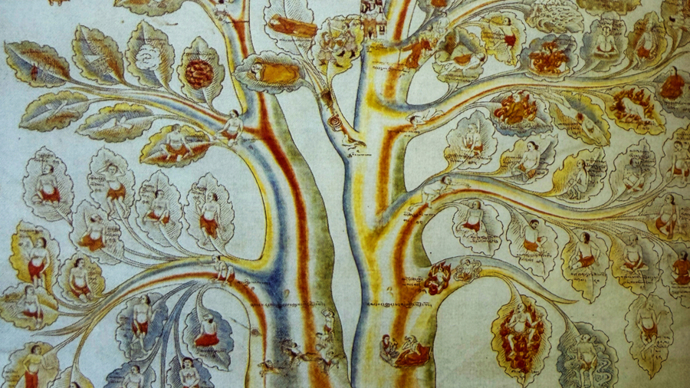
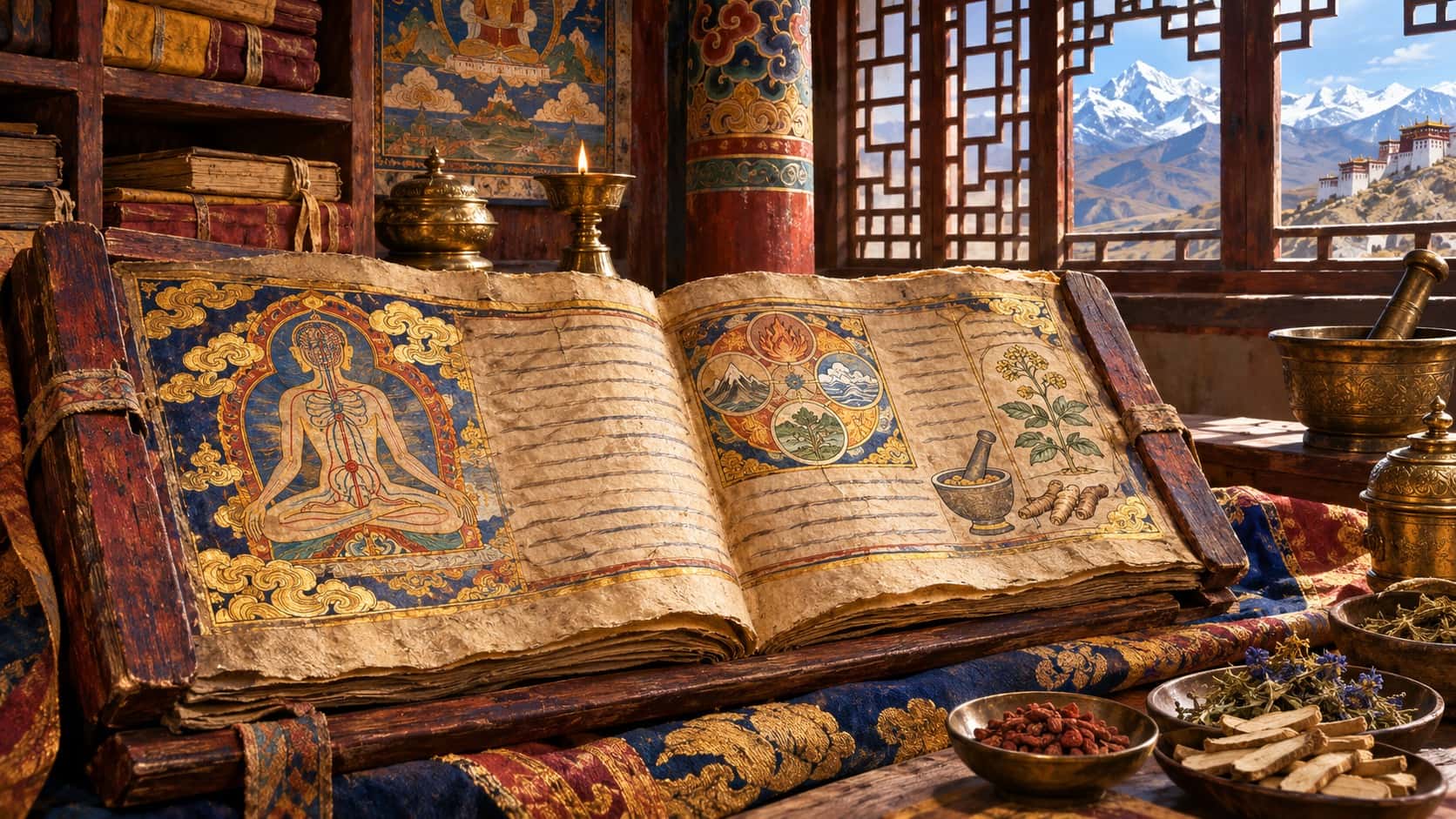
After the 7th century AD, Central Plains medicine, ancient Indian medicine, and culinary medicine flooded into the plateau with cultural exchanges. The traditional Chinese medicine classics brought by Princess Wencheng and Princess Jincheng when they entered Tibet were translated and interpreted by Chinese and Tibetan medical professionals, providing important nutrients for the formation of the Tibetan medical system. In the 8th century AD, Yutuo Ningma Yundan Gongbu, the founder of Tibetan medicine, compiled the abbreviated version of the "Four Medical Classics"; In the 12th century, Uto Sama Yundan Gongbu completed the final version. This work establishes a theoretical framework centered around the "Five Sources" (earth, water, fire, wind, and air) and the "Three Causes" (lung, chiba, and bacon), marking the formation of a systematic and complete theoretical and practical method for Tibetan medicine.
It is rare in the history of world medicine for a medical discipline to form such a complete system in the 8th century AD. And it can never be lost and continue to be passed down, thanks to the temple.
2、 Temples were the only "university" in ancient Tibetan areas, and Tibetan medicine was one of the "Ten Mings"
Tibetan traditional culture categorizes all knowledge into the "Ten Mings": the Big Five Mings are Gongqiao Ming, Yifang Ming, Shengbao Ming, Yinming, and Neiming, while the Small Five Mings are rhetoric, rhetoric, prosody, drama, and astrology. Tibetan medicine is one of the "medical prescriptions", which studies human physiology, pathology, diagnosis, medicine, treatment, and health preservation. Its status is on par with Buddhism, logic, and technology.
The key is that in ancient Tibetan areas, the institutions that carried out the functions of "learning and transmitting knowledge" were mainly temples. The copying, preservation, teaching, annotation, and debate of classics are almost all completed in temples. Monks are not only practitioners, but also scholars, doctors, painters, and calendrists. Taking Labrang Monastery as an example, its six colleges study Xianmi Buddhism, astronomy and calendar calculation, Tibetan medicine, poetics, grammar, calligraphy and painting, sculpture, and mandala painting, and are known as the "Tsinghua and Peking University" of Tibetan culture.
Therefore, Tibetan medicine has gained three things that are difficult to provide elsewhere in the temple: firstly, a stable education system, with the Manbaza warehouse having primary, secondary, and tertiary levels, as well as outpatient departments and pharmaceutical workshops; The second is the complete inheritance of literature. The Four Medical Classics, spanning over a thousand years, have maintained a consistent version due to the copying, editing, and annotations of generations of temple scholars; The third is the noble medical ethics and public welfare background. In addition to daily consultations, the "Mamba" in the temple also provides medical treatment and relief in case of epidemics and disasters, and teaches the public about disease prevention and health preservation.
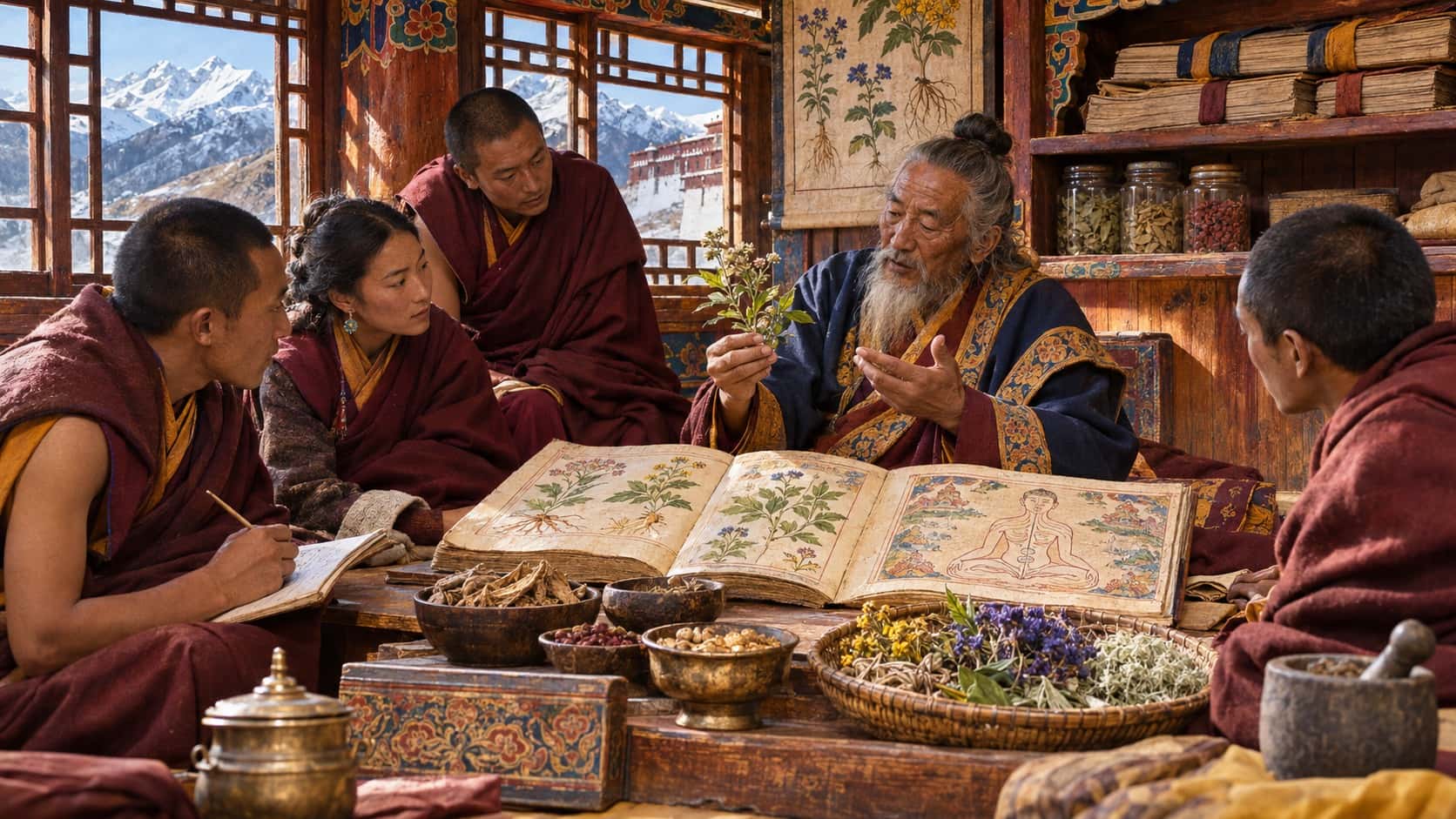
3、 Manba Zhacang: Each temple is a higher education institution for Tibetan medicine
Manba Zhacang "is a specialized institution for studying Tibetan medicine that emerged in Tibetan Buddhist temples since the 17th century, marking the shift of Tibetan medicine from father son and master disciple transmission to a more organized and institutionalized inheritance.
In 1643, the Fifth Dalai Lama founded the medical school "Zhuopanlin" (meaning "Lizhongzhou") in the west hall of the Zhebang Monastery, which was the earliest Tibetan medical school in the monastery;
In 1696, Di Si Sang Jiejiacuo founded the Medical Benevolence Hospital in Yaowang Mountain, becoming the largest medical college in Xizang's history, and established a system of student selection, student status management and manor supply, which has a fairly complete "college system"; In 1711, the Manbaza Warehouse of Tashilhunpo Monastery was established, and in 1757 it was named "Tashilhunpo Medical Mingrui Mani Changshengzhou"; The completion of the Mamba Zhacang at Labrang Monastery in 1784 played a crucial role in the dissemination of Tibetan medicine in Anduo, Mongolian cultural circles, and even the Buryat region of Russia. During the same period, Qinghai Guanghui Temple, Xiaqiong Temple, Lajia Temple, Youning Temple, as well as some temples in Inner Mongolia and Beijing Yonghe Temple, also successively established Manba Zhacang.
In the Tibetan region, almost all slightly famous temples have Manbazaars, which integrate teaching, diagnosis and treatment, and pharmaceuticals into one. They are the true "cradle" and "research institute" of Tibetan medicine.
4、 Famous doctors emerge from various sects: from ancient monk doctors to contemporary masters of Chinese medicine
One intriguing thing in the history of Tibetan medicine is that many top Tibetan doctors grew up in temples or as direct disciples of lamas or living Buddhas. They recite scriptures during the day and study medicine at night; In summer, lead disciples to go up the mountain to collect herbs, and in winter, conduct pharmaceutical consultations; In the event of epidemics or disasters, open warehouses for pesticide application and provide free medical consultations to assist the people. Medicine is both a skill and a practice for them.
This tradition continues to this day. The growth path of the Chinese medicine master Nima (Tibetan medicine) is almost the most vivid footnote of "passing down in temples": in 1943, at the age of only 11, he studied under Living Buddha Lobsang Lhundrup Gyatso, and for the next 20 years, he also studied under Tibetan medicine masters such as Living Buddha A and B, Norbert Rinpoche, and Tso Rujiro. Under Tso Rujiro, he received the orthodox Tibetan medicine "Zotai" processing technique. The preparation process of "Seventy Flavored Pearl Pills" and "Saitai" developed under his leadership, as well as the preparation technology of Tibetan medicine "Arula" Hezi, have both been listed as national intangible cultural heritage protection projects.
The equally memorable Tibetan medicine master Qinrao Norbu, who became a monk from a young age, founded Menzikang and served as its director in the 20th century. He wrote books such as "The Essence of the Pediatric Physician", "The Wonderful Golden Grain", and "The Treasure Vase of Ganlu", and "Menzikang" was a key hub for Tibetan medicine to move from temples to modern times.
5、 National Strength and Comprehensive Revitalization; From traditional inheritance to modern system
Since the peaceful liberation of Xizang, especially since the democratic reform, the state has continued to support the protection and development of Tibetan medicine. The construction of Tibetan hospitals, grassroots services, compilation of ancient books, talent cultivation, and scientific research work are constantly advancing, gradually integrating Tibetan medicine services into the modern medical and health system.
In 1959, Yaowangshan Medical College merged with Menzikang and became an important foundation for the construction of modern Tibetan medical institutions. In 1989, the higher education of Tibetan medicine in Xizang entered a new stage; In 2018, the Ministry of Education agreed to change the name of Xizang Tibetan Medical College to Xizang Tibetan Medical University. Nowadays, traditional apprenticeship and higher education complement each other, with medical care, teaching, and scientific research developing in synergy. Having doctoral programs and postdoctoral research stations. Qinghai University, Gansu University of Traditional Chinese Medicine, Chengdu University of Traditional Chinese Medicine and other universities have successively developed Tibetan medicine majors, and a multi-level training system of undergraduate, master's and doctoral degrees has gradually taken shape. Several provinces across the country, including Beijing, Harbin, Chengdu, and Shaanxi, have established Tibetan medicine specialty hospitals. The state attaches great importance to and continues to invest in ethnic medicine, allowing the inherited content to continue to develop under new institutional and technological conditions.
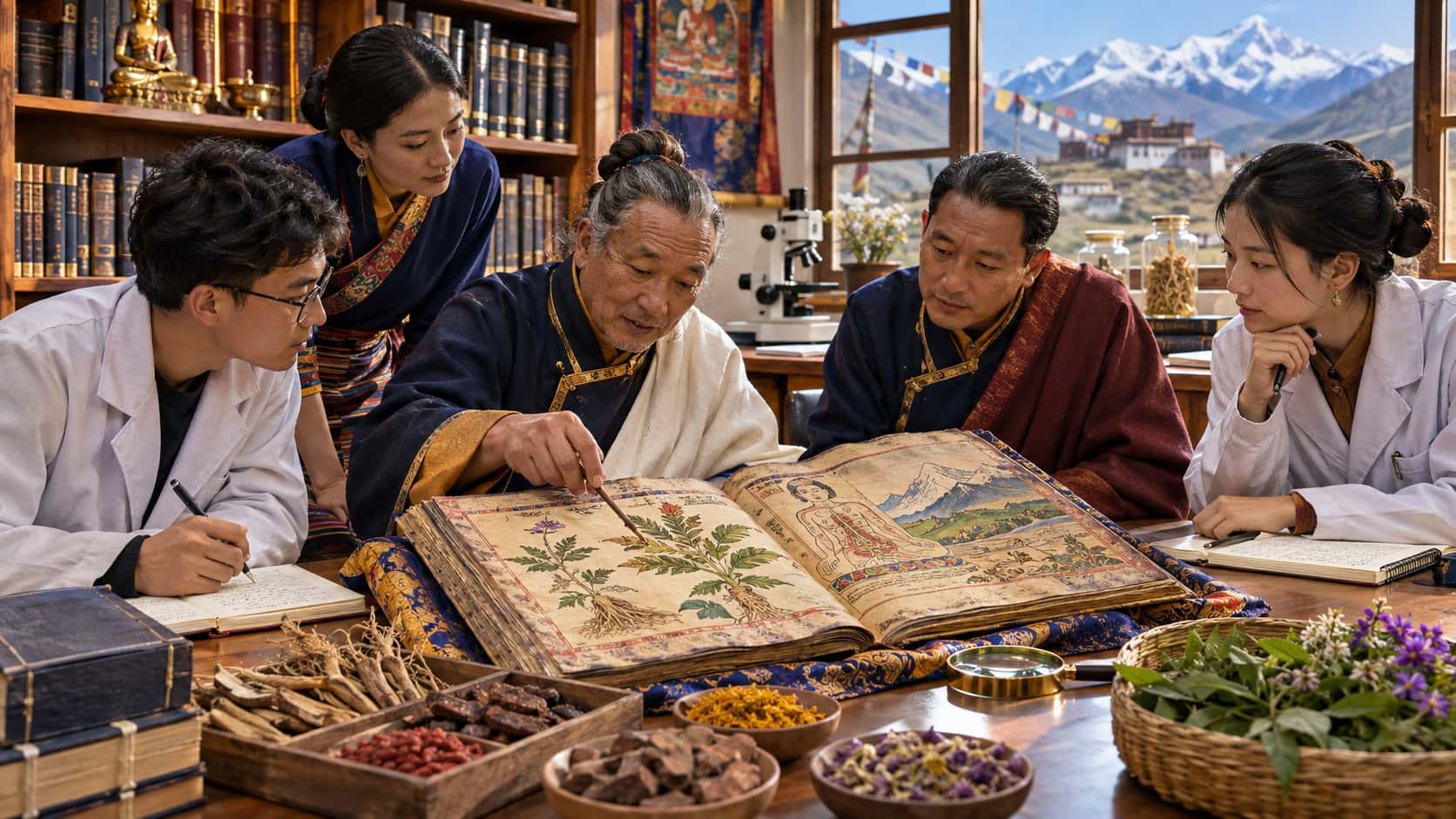
6、 World level recognition: National Intangible Cultural Heritage, Intangible Cultural Heritage of Humanity, and Memory of the World Register
The value of Tibetan medicine has been officially recognized by the international community.
At the international level, in November 2018, China's application for the "Tibetan Medicine Bath Method" was included in the UNESCO Representative List of the Intangible Cultural Heritage of Humanity. In 2023, the foundational work of Tibetan medicine, "Four Medical Classics," was included in the UNESCO Memory of the World Register.
At the domestic level: Since Tibetan medicine became the first batch of national intangible cultural heritage projects in 2006, 17 Tibetan medicines have been included in the national intangible cultural heritage list, covering Tibetan medicine external treatment methods (Antong therapy, Hormer therapy, Xiuba therapy, Tibetan medicine bath therapy, etc.), Tibetan medicine urine diagnosis methods, Tibetan medicine processing techniques, Tibetan medicine 70 flavor pearl pill compatibility techniques, 70 flavor pearl pill Saitai processing techniques, Zotai mercury washing and processing techniques, Ganlu Tibetan medicine blessing ceremony, Tibetan medicine Arula processing techniques, etc.
A medical classic has entered the world's memory, a therapy has entered the intangible cultural heritage of humanity, and seventeen techniques have entered the national level list - this is not a pile of honors, but a solemn confirmation of the diversity of human medicine.
7、 Going global: International seminars and academic dialogues continue to heat up
Tibetan medicine has never been local medicine on the plateau. Over a thousand years ago during the Tubo period, it was widely used in Southeast Asia, Eastern Europe, Mongolia, and Xinjiang. More than a thousand years later, in the 19th century, with the footsteps of missionaries, Tibetan medicine entered the field of European scholars. The famous Tibetan doctor Qudengbaima was invited to St. Petersburg to help the Russian authorities solve the plague problem. Tibetan medicine has been widely spread in Europe since then. In 2017, six types of Baima Tibetan medicine entered the medical systems of European countries, from Tibetan medicine teaching institutions in the United States, Spain and other places to Tibetan medicine clinics that have been incorporated into the local medical system in India, Bhutan, Nepal and other places. The footprint of Tibetan medicine has already crossed the Himalayas. According to official statistics, traditional medical services have spread to over 150 countries and regions worldwide.
Since November 1998, the "First International Symposium on Tibetan Medicine" organized by George Washington University was held in Washington, D.C., the field of Tibetan medicine has sparked an "international conference fever": international Tibetan medicine academic exchange conferences are held every year. In 2017, the World Conference on Tibetan Medicine was held at Harvard Medical School in the United States... In June 2026, the International Symposium on Tibetan Medicine was held in Kathmandu, Nepal; in August 2026, the second "Four Medical Classics" and Mantang Research International Academic Conference were held in Lhasa, with more than 200 experts and scholars from countries such as the United Kingdom, Germany, Austria, and Mongolia attending and exchanging ideas. Tibetan medicine is accelerating its global presence and expanding its influence in South Asia, Europe, and America.
The emphasis of Tibetan medicine on holistic view, simultaneous treatment of body and mind, and the combination of diet, daily life, and external treatment with medication perfectly responds to the dilemma of modern medicine in the face of chronic diseases and psychosomatic diseases, which places more emphasis on the local and less on the overall. This is precisely the underlying reason why it can be seen by the world.
8、 Tibetan medicinal herbs and advantages of Tibetan medicine: exploring new paths in the field of chronic and difficult diseases
Tibetan medicine is based on the plants, animals, and minerals of the Qinghai Tibet Plateau, and has unique therapeutic effects on common, frequently occurring, and endemic diseases in the hypoxic environment of the plateau. Plant medicinal materials mostly grow in high-altitude, strong sunlight, large temperature difference between day and night, and low pollution high-altitude environments. They have a long growth cycle, distinct medicinal properties, strong medicinal activity, and high content of active ingredients.
In terms of diagnosis and treatment, Tibetan medicine is guided by the theories of "five sources" and "three causes", emphasizing the treatment based on syndrome differentiation and overall regulation. The methods include internal and external treatment methods such as taking Tibetan medicine and medicinal baths, rubbing, moxibustion, bloodletting, and ironing. In clinical practice in mainland China, Tibetan medicine has shown unique value for some chronic diseases, difficult diseases, and physical and mental related illnesses that are difficult to treat in modern medicine.
It should be noted that Tibetan medicine also emphasizes differentiation of syndromes and individual differences in diagnosis and treatment. The specific plan must be determined through face-to-face or video interviews with physicians from specialized Tibetan medicine hospitals.
9、 Xi'an Yanta Ganlu Hospital with Tibetan Medicine Characteristics: Making Tibetan Medicine Truly Benefit the Mainland People
The first step for Tibetan medicine to benefit the world is to enter the daily life in mainland China.
In 2012, the Yanta Ganlu Hospital in Xizang was established with the strong support of the Health Commission of Tibet Autonomous Region and the State owned Assets Supervision and Administration Commission. It is one of the few special hospitals with Tibetan medical characteristics in the mainland. The hospital takes Tibetan medicine and Tibetan medicine as its treatment characteristics, and has studied Tibetan medicine for more than ten years. It insists on inheriting Tibetan medicine classics and combining modern clinical needs, explores the standardized application path of Tibetan medicine in the prevention and treatment of diseases in the mainland, and has sent doctors to Lhasa to study Tibetan medicine bath, Xiuba, Homai and other traditional external treatments in the Tibetan Hospital of Xizang Autonomous Region.
The director of Ganlu Hospital is a student of Tibetan medicine master Dan Zengpingcuo, who has been engaged in clinical research of Tibetan medicine for more than 30 years, and has compiled works such as "Mysterious Xizang, Magic Tibetan Medicine". In the 1990s, he followed several Tibetan medical masters such as Danzeng Pingcuo to systematically learn characteristic diagnosis and treatment methods such as tongue diagnosis and urine diagnosis in Tibetan areas, and went to temples several times with his master to discuss Tibetan medicine with monk doctors. This path of learning medicine precisely confirms the main theme of this article: Tibetan medicine is inherited in temples.
In clinical practice, the Ganlu physician team is skilled in using Tibetan medicine to diagnose and treat neurological and psychiatric disorders such as spasmodic torticollis, muscle tone disorders, Tourette syndrome, Parkinson's disease, as well as schizophrenia and bipolar disorder, using Tibetan medicine and characteristic therapies.
Tibetan medicine has come from temples, and today it is delivering the wisdom of the snowy land to patients in mainland China through such a mainland hospital.
Conclusion
From the herb gatherers of the Bon era to the Four Medical Classics written by Jin Zhi; From the Mambazacang of Drepung Temple, Yaowang Mountain, Ta'er Temple, Labrang Temple to the classroom of Xizang Tibetan Medical University; Tibetan medicine has gone through a long and steadfast path from being listed as a national inheritor of intangible cultural heritage to being included in UNESCO's Memory of the World and Representative List of Intangible Cultural Heritage of Humanity.
It was born in a temple because the temple gave it its initial wisdom;
It is inherited from temples because they have preserved its millennium cultural heritage;
It developed in temples because temples made it a discipline with systems, medical ethics, and classics;
And today, it benefits the world because health knows no bounds and wisdom is shared.
The medical lamp from the snowy region is illuminating the path of recovery for more people.